Action Pencil: The Versatile Handwritten Font
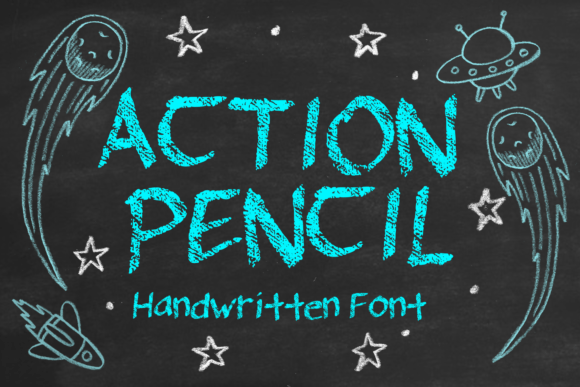
There is a distinct difference between digital perfection and human warmth. In a world saturated with sleek, geometric sans-serifs and rigid corporate typefaces, the eye naturally gravitates toward imperfection. It seeks the organic flow of a hand-drawn line, the slight wobble of a marker on paper, and the spontaneous energy of a quick sketch. This is where Action Pencil finds its place. It is not merely a font; it is a design tool that bridges the gap between professional layout and personal touch. As a natural and very versatile handwritten typeface, it offers creators a way to inject personality into their work without sacrificing readability or style.
Understanding the Appeal of Handwritten Typography
Before diving into specific use cases, it is helpful to understand why a font like Action Pencil resonates with such a broad audience. Handwritten fonts serve a psychological function in design. They signal authenticity. When a viewer sees text that mimics handwriting, they subconsciously perceive the message as more approachable, friendly, and less "corporate." For marketers and small business owners, this can be the difference between a customer scrolling past an ad and stopping to read it. For educators, it can make learning materials feel less intimidating. The versatility of Action Pencil lies in its balance; it is casual enough to feel fun but structured enough to remain legible across various mediums.
For Creators and Designers: Adding Texture to Digital Work
Graphic designers and digital artists often struggle with the sterility of vector-based tools. While software like Adobe Illustrator or Photoshop offers precision, it can sometimes lack soul. Action Pencil allows these professionals to reintroduce that human element quickly. Whether you are designing a poster for a local music festival or creating assets for a social media campaign, this font provides an immediate "cool" factor.
Consider the workflow of a social media manager. They need to produce content rapidly that stands out in a crowded feed. A quote graphic using a standard bold font might get lost, but the same quote rendered in Action Pencil feels like a personal note from a friend. It invites engagement. Similarly, for comic book artists or illustrators, finding a lettering font that complements hand-drawn art without looking out of place is crucial. Action Pencil’s natural strokes blend seamlessly with inked lines, making it an excellent choice for speech bubbles, sound effects, or title cards in indie comics and zines.
Entrepreneurs and Small Business Owners: Branding with Personality
For entrepreneurs, especially those in lifestyle, craft, or food industries, brand identity is everything. A bakery, a handmade jewelry store, or a coffee shop does not want to look like a multinational bank. They want to convey warmth, craftsmanship, and care. Action Pencil serves as a powerful tool in this branding toolkit. It works exceptionally well for logos, packaging labels, and menu boards.
Imagine a sticker sheet for a small Etsy business selling organic soaps. Using a rigid, technical font might suggest a laboratory product. Using Action Pencil suggests something made by hand, with love, in a small batch. This subtle cue aligns the visual identity with the value proposition of the product. Furthermore, because the font is versatile, it can be used across different touchpoints—from the thank-you card included in the package to the headers on the company’s website—creating a cohesive brand experience that feels genuine rather than manufactured.
Educators and Parents: Making Learning Engaging
The application of Action Pencil extends beyond commercial design into education and parenting. Teachers and homeschooling parents are constantly looking for ways to make worksheets, flashcards, and classroom decorations more engaging for children. Standard textbook fonts can feel dry and authoritative. A handwritten style, however, mimics the teacher’s voice or a parent’s note, creating a safer, more inviting learning environment.
For kid’s book design, whether self-published or part of a school project, the typography needs to match the whimsical nature of the illustrations. Action Pencil is ideal for titles, chapter headings, or even dialogue in early reader books. It helps young readers associate reading with creativity and fun rather than rote memorization. Additionally, for educators creating resources for students with learning differences, a clear yet informal font can reduce anxiety and make text appear less dense and overwhelming.
Hobbyists and DIY Enthusiasts: Elevating Personal Projects
You do not need to be a professional designer to appreciate the utility of a good handwritten font. Hobbyists who enjoy scrapbooking, journaling, or creating homemade greeting cards can use Action Pencil to elevate their projects. With the rise of home printing and cutting machines like Cricut or Silhouette, many consumers are designing their own decals, t-shirts, and party decorations.
For a beginner, the learning curve of complex typography rules can be steep. Action Pencil simplifies this. Because it is designed to look natural, it forgives minor layout errors. If the kerning (spacing between letters) is not perfect, it still looks like handwriting, where spacing varies naturally. This makes it an forgiving and rewarding choice for those new to design software. Whether you are making a birthday banner, a custom mug for a friend, or a label for your homemade jam, this font adds a polished, thoughtful touch that elevates the perceived quality of the gift.
Evaluating Fit: Is Action Pencil Right for Your Project?
While Action Pencil is versatile, it is not a universal solution for every design need. Understanding when to use it—and when to avoid it—is key to leveraging its strengths. Here are some practical considerations to help you decide if it matches your goals:
- Readability vs. Style: Action Pencil is highly legible for short to medium lengths of text, such as headlines, quotes, or short paragraphs. However, for long-form body text in a novel or a dense legal document, a traditional serif or sans-serif font is usually a better choice to prevent reader fatigue.
- Tone Alignment: Ask yourself about the emotion you want to convey. If your project requires seriousness, authority, or high-tech precision (such as a financial report or a medical device manual), a handwritten font may undermine your credibility. Conversely, if the goal is to evoke nostalgia, joy, creativity, or approachability, Action Pencil is an excellent fit.
- Medium Constraints: Consider where the text will live. On a large poster or a t-shirt, the texture of the font shines. On a small mobile screen, ensure the size is large enough to maintain clarity. The natural variations in stroke width that give the font its character can disappear if scaled down too far.
Practical Tips for Using Action Pencil Effectively
To get the most out of this typeface, consider these best practices regardless of your skill level:
- Pairing: Combine Action Pencil with a clean, simple sans-serif font for body text. This creates a pleasing contrast that highlights the handwritten elements without cluttering the design.
- Color Choice: Since the font mimics pencil or marker, it often looks best in dark gray, charcoal, or deep blue rather than pure black, which can look too harsh against the organic lines. Experiment with colors that match the "vibe" of your project.
- Whitespace: Handwritten fonts need room to breathe. Avoid cramming text into tight spaces. Generous whitespace enhances the casual, relaxed feel of the typography.
Ultimately, Action Pencil is about feeling the good vibes of creation. It removes the barrier between your idea and its visual representation, allowing you to create cool designs that resonate on a human level. Whether you are a seasoned designer looking for a reliable script font or a beginner starting your first DIY project, this tool offers the flexibility and charm needed to bring your vision to life. By understanding its strengths and applying it with intention, you can transform ordinary layouts into engaging, memorable experiences.